Reclaiming the Wesleyan Way of Formation, Stability, and Mission – Part Two
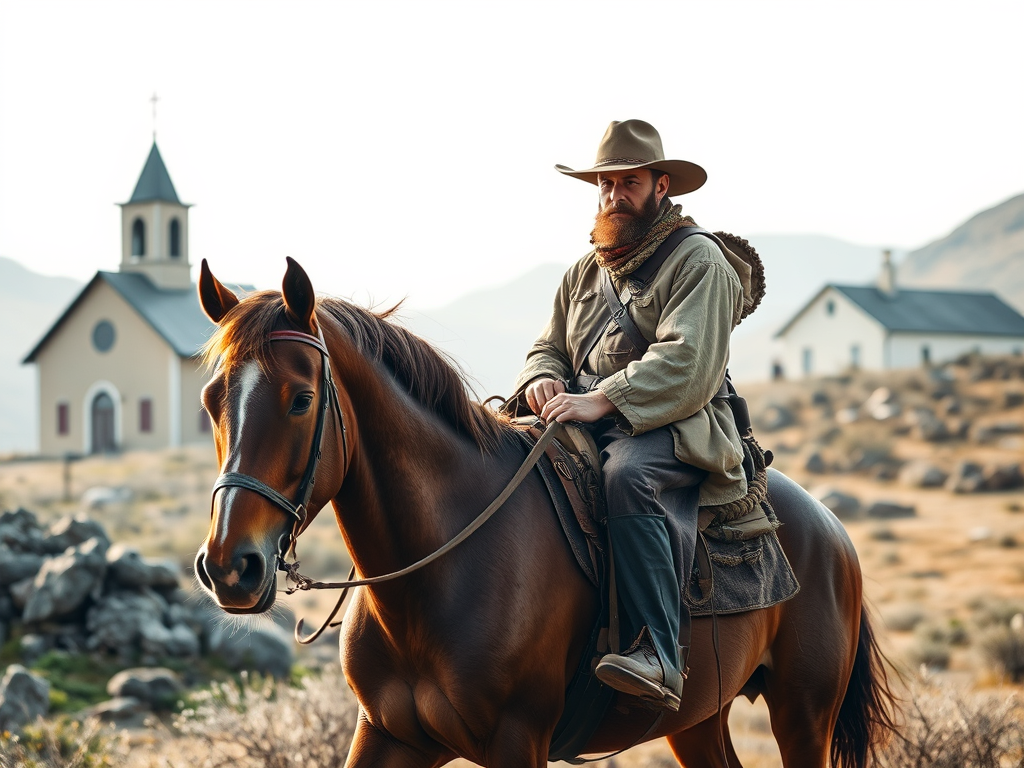
In my previous post I noted that a pastor recently remarked, “The churches I know about that I’d be willing to uproot my family for are all Reformed Calvinist or Roman Catholic. I think there should be Wesleyan churches that work like that.” Clearly he gave voice to a quiet ache among many ministers and congregations: the longing for depth, coherence, and rooted community—for churches where form matches faith, and where families can plant their lives without feeling spiritually transient. Yet behind this yearning lies a subtle tension with one of John Wesley’s defining innovations: the itinerant ministry. As a Presiding Elder and former military officer I know how I hear such comments, how might Wesley hear them today?

I. Itinerancy as Apostolic Availability
In the 18th century, Wesley’s system of itinerant preachers was nothing short of revolutionary. Methodism was not yet a denomination but a revival movement within Anglicanism, and its preachers were “men of one work”—called to spread scriptural holiness wherever the Spirit opened doors. “Go not where you please, but where God sends you; not where you desire, but where the work of the Lord requires,” Wesley instructed his preachers in the Large Minutes (1748).
Itinerancy was a form of apostolic obedience, a safeguard against comfort and localism. Wesley feared that, left to their own preferences, ministers might “settle down among a people they love” and lose their edge for evangelism. The discipline of movement kept the mission alive. To stay too long in one place was, in Wesley’s mind, a danger to the preacher’s soul and the society’s vitality.
In short, itinerancy was not an administrative policy—it was a spiritual posture. It meant trusting the connection, the larger body, to discern where one’s gifts were most needed. It reflected the Pauline ideal: “I will gladly spend and be spent for your souls” (2 Cor. 12:15).
II. From Movement to Institution
Over time, however, itinerancy evolved. As Methodism moved from a revivalist movement to an established church, mobility became systematized. Preachers no longer rode horseback between societies every few weeks; they became resident pastors of local congregations. The system remained connectional, but the spirit of missionary availability gradually gave way to a more managerial model.
In the modern era—particularly in the United States—Methodist clergy began to experience itinerancy as a bureaucratic assignment process rather than a spiritual discipline. The annual conference became a placement board, and local churches became destinations rather than deployments. While this system protected connectional equity, it also weakened the personal sense of call and partnership between pastor and people.
Thus, when today’s Global Methodist pastors express a desire for stability or discernment in where they serve, they are not rebelling against Wesley’s spirit—they are, in many ways, reacting to a hollowed-out version of itinerancy that has lost its theological depth.
III. The Pastor’s Longing: A Call for Formational Depth
The pastor’s remark—“I’d uproot my family only for a church like that”—is, in essence, a yearning for communities of depth and structure. He longs for the kind of church that takes formation as seriously as the Reformed and Catholic traditions often do: catechesis, liturgical rhythm, sacramental discipline, and theological coherence.
Wesley would understand that longing. He built Methodism precisely to provide such order—societies, classes, and bands that turned conversion into formation. The genius of early Methodism was that its pastors did not simply go where they wished, and its members did not simply attend where they pleased; both entered into a covenant of disciplined grace.
Thus, the pastor’s sentiment, though modern in expression, echoes Wesley’s own concern that the Methodist movement might one day “exist as a dead sect, having the form of religion without the power.” His antidote was not nostalgia, but discipline—doctrine, spirit, and structure held together in mutual accountability.
IV. Stability Without Stagnation: A Benedictine Parallel
Here the analogy to the Benedict Option becomes illuminating. St. Benedict’s 6th-century monastic “rule” provided stability in a collapsing world: communities ordered around prayer, work, and common life. But that stability was never mere stasis—it was rooted mission. Monasteries became centers of renewal because they were disciplined, not idle.
Wesley’s itinerancy served a similar function in the 18th century: it kept Methodists flexible, nimble, and spiritually alive amid the chaos of industrialization and social change. But in the 21st century, the greater danger is not stagnation but rootlessness.
In this context, the Global Methodist Church faces the challenge of integrating the best of both traditions:
- The availability of itinerancy with the stability of Benedictine order.
- The missionary zeal of movement with the discipleship depth of formation.
This is what we might call “stable itinerancy”—a pattern where pastors are willing to go where sent, yet stay long enough to rebuild the structures of grace that make holiness sustainable.

V. What Wesley Might Say Today
Were Wesley to hear a pastor say, “I would only move for a church worth uprooting my family for,” he might first admonish, then exhort.
He would admonish gently: “Take care that your obedience to the call of Christ not be constrained by comfort or family design. You are not your own; you are sent to serve the world, not merely to choose your field.”
But he would also affirm: “Seek not the grandest parish, but the truest one—the place where holiness can thrive. Go where grace is needed most, and make of that place a house fit for your family’s sanctification.”
Wesley believed that the pastor’s family life was itself a form of ministry. Stability, for him, was not geographic but spiritual—anchored in prayer, discipline, and covenantal love. To “uproot” was not to lose one’s home but to plant the gospel anew.
Thus, he might say to today’s pastors: “Do not search for a church worth serving—build one. Go where Christ sends you, and there form a people worth uprooting your life for.”
VI. The Global Methodist Moment: Recovering Obedient Availability
The Global Methodist Church, emerging from fracture and reform, now stands at a historic juncture. It has inherited the skeleton of itinerancy but must recover its muscle and marrow—the spiritual logic behind the system. If it merely replicates the bureaucracy of appointments, it will repeat the mistakes of the past. But if it reclaims itinerancy as a covenant of mutual obedience—pastors and congregations discerning together under the Spirit’s call—it can renew the Methodist movement for a new age.
In today’s Methodist world, the very word itinerancy has become almost anathema—resisted by pastors and congregations alike. Too often it is seen as an inconvenience rather than a covenant, a bureaucratic process rather than a spiritual discipline. This resistance exposes how far we have drifted from Wesley’s original understanding.
When the 2024 Global Methodist Church Book of Doctrines and Disciplines states that itinerancy calls clergy to be “willing and ready to serve wherever most needed” (§504), those words should stir our souls. They echo the apostolic spirit that sent Paul across the Mediterranean and Wesley’s preachers across the frontiers of Britain and America. Yet in practice, “wherever most needed” too often becomes “wherever I prefer” — a subtle but telling inversion of vocation.
My years as an Army officer make this clear to me. For two decades I moved every two or three years, often to places I had not requested. I went because I had taken an oath. I belonged to something larger than my own comfort. That same obedience lies at the heart of true itinerancy. To accept an appointment is to receive an order from Christ through the Church. When clergy begin to bargain—“I won’t go unless the pay is right,” or “I’ll only serve there if…”—the spirit of the call erodes into careerism.
I once overheard a senior officer in the Pentagon lament that he had been given command of a training unit rather than a combat battalion. I finally interrupted him to say, “You should be grateful for that command; those soldiers need a leader just as much as any others.” The same holds true for the pastor sent to a small rural congregation or a struggling urban parish. Every appointment matters. Every community needs leadership, prayer, and presence.
The phrase “open itinerancy” in our polity rightly affirms opportunity for all clergy without discrimination, yet it also risks suggesting a marketplace of preferences—pastors shopping for churches, churches negotiating for pastors. Wesley would have found that unthinkable. His itinerants went where most needed, not where best suited. The time has come to replace “open itinerancy” with “stable itinerancy”: a covenantal mobility rooted in mission, not ambition; faithful to the Church’s discernment, yet committed to the long work of formation where one is sent.
True itinerancy is not perpetual motion but faithful readiness. It is not a lack of roots but the willingness to be rooted wherever Christ plants you.
Such renewal must pair Wesley’s mobility with Benedict’s stability, forming pastors who are both rooted and ready. That is the essence of the Methodist Benedict Option: ordered grace for a disordered age.

VII. Conclusion: Rooted in Obedience, Mobile in Grace
The modern pastor’s question reveals a holy discontent—a desire for meaningful place, disciplined community, and faithful work. Wesley would honor that longing but reframe it. The goal is not to find the perfect appointment, but to make each appointment a site of holiness.
In the end, stable itinerancy is not a contradiction but a calling: to be faithful enough to stay, and free enough to go. It is the rhythm of grace that moves with purpose and dwells with love.
The military speaks of “orders” and “duty stations,” but Wesley would call them “appointments” and “fields of grace.” Both require humility, courage, and trust. In every age, the Church’s health depends on leaders willing to go wherever most needed — not because it is pleasant or profitable, but because Christ’s body requires it.
Stable itinerancy does not cancel movement; it sanctifies it. It is not about clergy relocation but about spiritual deployment — the conviction that obedience is itself a means of grace.
As Wesley might remind us: “The world is my parish—but every parish must become a school of love.”
References
- John Wesley, The Works of John Wesley, ed. Thomas Jackson (London, 1827–1831).
- Wesley, Large Minutes (1748).
- Wesley, Thoughts Upon Methodism (1786).
- Wesley, Sermons on Several Occasions, esp. Sermon 92, On Zeal.
- Richard P. Heitzenrater, Wesley and the People Called Methodists (Abingdon, 1995).
- Randy L. Maddox, Responsible Grace: John Wesley’s Practical Theology (Kingswood, 1994).
- Kevin M. Watson, The Class Meeting (Seedbed, 2014).
- Rod Dreher, The Benedict Option (Penguin, 2017).
- St. Benedict, The Rule of St. Benedict, trans. Timothy Fry (Liturgical Press, 1981).
© 2025 Neville Vanderburg. All rights reserved.
Used with permission. No part of this work may be reproduced without written consent of the author, except for brief quotations in reviews or educational use.
 Opa's Haus
what a great explanation and delve into what modern pastorate should look like. “ Me thinks we might have lost our way”. I pray Holy Spirit guides us back. we see it in all walks of life. Too few callings and too many seeking success. Thank you. Hope you and YLWC are good
LikeLike